COIN FIELD GUIDE
Look twice before you list.
A coin’s metal content gives a starting point. A documented variety, mint error, or exceptional condition can change collector demand. The details must be verified on the actual coin.
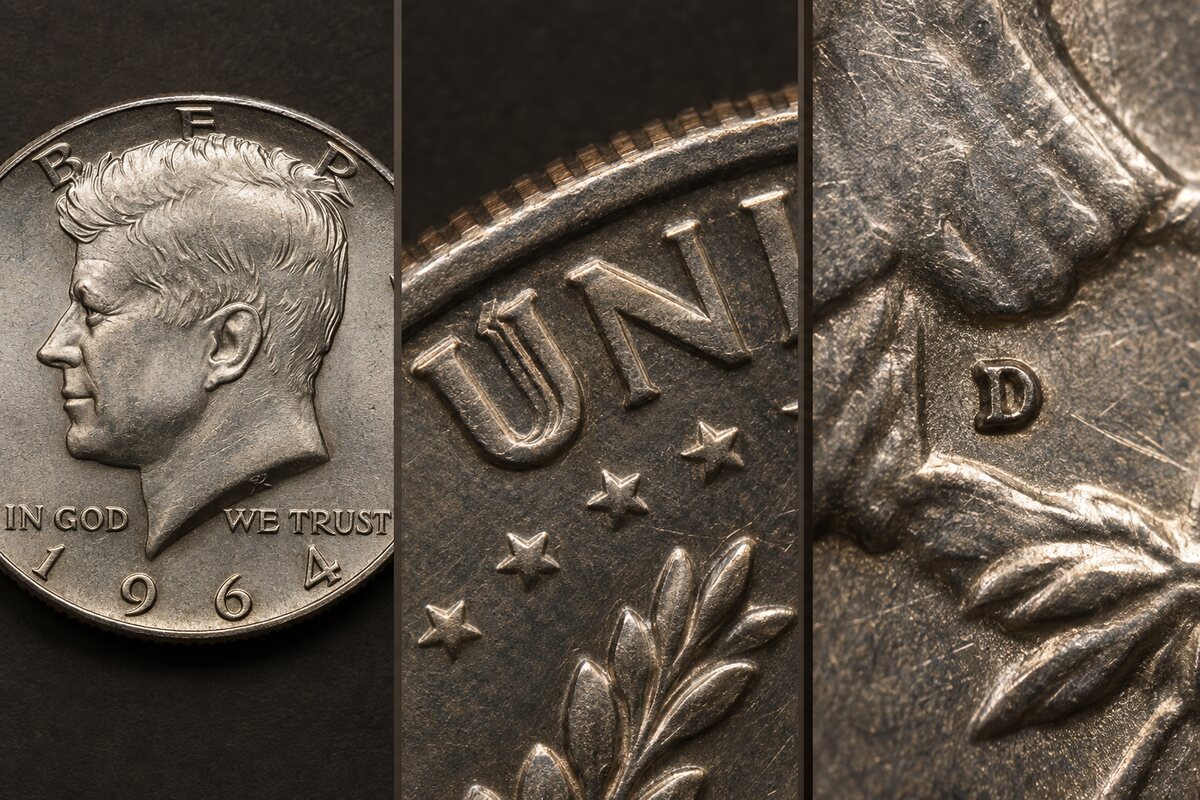
Design varieties
A variety is a repeatable design or die characteristic, not a one-off blemish. On a 1964 proof Kennedy half dollar, the Accented Hair variety has stronger strands above the ear. PCGS also identifies a weak or missing lower-left serif on the “I” in LIBERTY. Photograph both details sharply before claiming the variety.
Mint errors
Look for a strike that is clearly off center, a clipped planchet, a die break, or strong doubled design elements. Compare both sides and the edge. Scratches, flattened lettering, glare, and damage to proof-set plastic can resemble errors in a photo. A promising feature needs closer inspection and a matching reference.
Proof sets and condition
Check that the coins, dates, and packaging match the set. Photograph each coin close enough to inspect lettering and surfaces. Haze, spots, hairlines, or damaged plastic affect how buyers assess a set; a reflective photo alone cannot establish a grade or cameo designation.
Metal value
The edit page calculates an estimate from the number of 90% silver dimes, quarters, half dollars, and Morgan or Peace dollars you enter, multiplied by a current silver spot quote. Do not count the cent or nickel in a 1964 five-coin proof set as silver. Confirm the date and composition before using any preset. Melt value does not include a collector premium, selling fees, or shipping.
In section 4 of the edit page, choose a named error or rarity and press its “Check photos” button. The result addresses that one feature and tells you what to inspect next. It cannot certify an error, variety, authenticity, grade, or market premium. Confirm findings with the physical coin and a recognized reference or qualified grader before making a buyer-facing claim.